
There is something almost magical about a steaming bowl of garlic soup on a chilly evening, and if you have ever typed “best sopa de ajo near me” into your phone while standing outside a restaurant, you already know exactly what I mean. This dish, humble in its ingredients but bold in flavor, has a way of turning a simple dinner into a comforting ritual. Sopa de ajo, at its heart, is a rustic Spanish soup built on slow-cooked garlic, good bread, smoky paprika, and often a poached egg resting on top like a little golden crown.
Finding the best sopa de ajo near me is not just about proximity on a map. It is about tracking down a kitchen that respects tradition while still making the dish feel personal and warm. Some places rush it, using shortcuts that leave the broth thin and the garlic harsh. Others let it simmer for the time it deserves, coaxing out a mellow sweetness from the garlic that balances beautifully with the smokiness of paprika and the richness of olive oil. Knowing the difference between these two experiences is what separates a forgettable meal from one you will crave again next week.
What Makes Sopa De Ajo Special
Sopa de ajo originated in the rural kitchens of Castile, where cooks needed to stretch simple pantry staples into something filling and satisfying. Stale bread, garlic, olive oil, and paprika were combined with broth to create a dish that fed families through cold winters without requiring expensive ingredients. That history still matters today, because the best versions of this soup honor that resourceful, no-waste spirit rather than dressing it up beyond recognition.
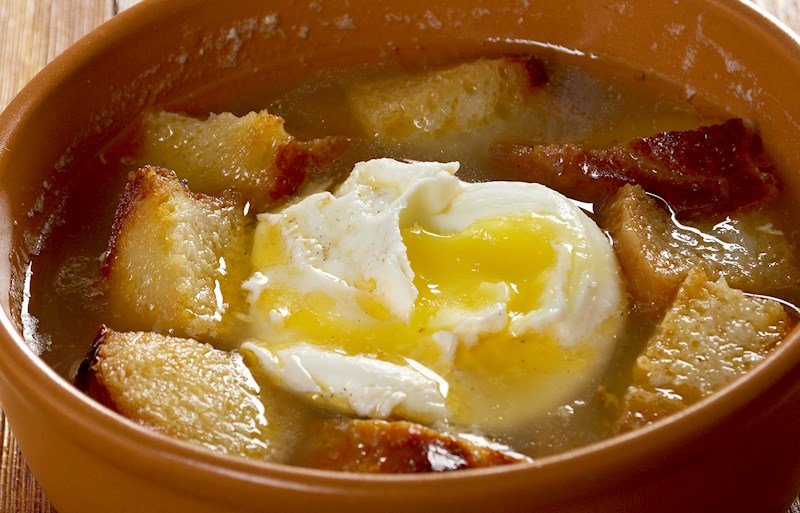
What makes the dish so beloved is the contrast of textures and flavors happening in a single bowl. The bread softens just enough to thicken the broth without turning to mush, the garlic mellows into something almost buttery after slow cooking, and the paprika adds a gentle smokiness that lingers on the palate. When a poached or lightly fried egg is added, the yolk breaks into the broth and creates a silky richness that ties everything together. A good chef once told me, “Sopa de ajo is proof that comfort food does not need complexity, it needs patience,” and that sentiment captures the dish perfectly.
How To Judge Quality When Searching Locally
When you search for the best sopa de ajo near me, the first thing worth paying attention to is the color and aroma of the broth. A well-made sopa de ajo should have a deep amber hue from properly toasted paprika and slow-cooked garlic, not a pale, watery look that suggests it was thrown together in a rush. The smell alone should hint at roasted garlic and warm spice before the bowl even reaches your table.
Texture is another giveaway. If the bread has dissolved into a gluey paste, the kitchen likely added it too early or used the wrong type of bread. The best versions use day-old rustic bread that holds a slight bite while still soaking up the broth’s flavor. Pay attention as well to whether the egg, if included, is cooked properly. A perfectly poached egg with a runny yolk elevates the dish, while an overcooked one turns rubbery and loses its purpose entirely.
Regional Variations Worth Knowing
While Castilian sopa de ajo is the most recognized version, different regions and even different households add their own touches. Some cooks include a bit of Serrano ham for extra depth, while others skip meat entirely to keep the dish vegetarian-friendly and centered purely on garlic and bread. Knowing these variations helps when you are comparing restaurants, since not every “best sopa de ajo near me” result will taste the same, even within the same city.
In some coastal areas, cooks add a splash of sherry vinegar to brighten the broth, cutting through the richness of the olive oil and garlic. Others finish the dish with a sprinkle of fresh parsley for color and a slightly herbal note. None of these additions are wrong, but they do change the character of the soup significantly. If you have a strong preference for the traditional, no-frills version, it helps to ask staff directly how their kitchen prepares it before ordering.
Table: Comparing Common Sopa De Ajo Styles
| Style | Key Addition | Flavor Profile | Best For |
|---|---|---|---|
| Classic Castilian | Poached egg | Rich, smoky, mellow garlic | Traditionalists wanting the original experience |
| Vegetarian Style | No meat, extra olive oil | Lighter, garlic-forward | Plant-based diners |
| Ham-Enriched | Serrano ham | Deeper, savory, slightly salty | Those who enjoy heartier broths |
| Coastal Twist | Sherry vinegar | Brighter, tangy undertone | Diners who prefer acidity to cut richness |
| Herb-Finished | Fresh parsley | Fresh, slightly grassy finish | Those who like a lighter visual and taste balance |
This table should give you a quick reference point the next time you are scanning a menu or reading reviews while searching for the best sopa de ajo near me. Knowing which style a restaurant leans toward can save you from ordering something that does not match what you were hoping for.
Questions Worth Asking Before You Order
Before committing to a restaurant based purely on search results, it helps to look at how the dish is described on the menu. Vague descriptions like “garlic soup” without any mention of preparation style can be a red flag, since it often means the kitchen is not particularly invested in showcasing the dish’s traditional roots. On the other hand, menus that mention slow-cooked garlic, toasted bread, or a poached egg tend to signal a kitchen that takes the recipe seriously.
Reading recent reviews can also reveal a lot. Look specifically for comments about broth consistency, garlic balance, and freshness rather than just star ratings. A restaurant might have a high overall rating because of its main courses while its soups remain average. Filtering through comments for specific mentions of sopa de ajo will give you a much clearer picture than a generic five-star badge ever could.
Why Freshness And Preparation Time Matter
Garlic soup is deceptively simple, but that simplicity means there is nowhere for shortcuts to hide. If garlic is not cooked slowly enough, it can taste sharp and almost bitter rather than sweet and rounded. If the broth is made ahead of time and reheated repeatedly throughout the day, it often loses the delicate balance that makes the dish special in the first place.
A restaurant owner I spoke with once explained it well: “You cannot rush garlic, and you cannot fake the depth that comes from letting it cook low and slow.” That philosophy applies directly to how you should judge places when searching for the best sopa de ajo near me. Kitchens that prepare the soup in smaller batches throughout service, rather than one large pot sitting for hours, tend to deliver a fresher, more vibrant result every single time.
The Role Of Bread And Olive Oil
Bread is not just a filler in this dish, it is a structural ingredient that determines the final texture of the soup. Rustic, slightly stale bread absorbs broth without disintegrating too quickly, giving the soup body without making it feel heavy. Some kitchens toast the bread lightly before adding it, which adds a subtle crunch that softens gradually as it sits in the hot broth.
Olive oil plays an equally important role, since it carries much of the aromatic flavor from the garlic and paprika. High-quality extra virgin olive oil creates a smoother, more fragrant base, while lower-quality oil can leave the broth tasting flat or even slightly greasy. When you finally find a place that nails both the bread and the oil, you will notice the difference immediately, and it usually explains why that particular spot keeps showing up when people search for the best sopa de ajo near me.
How Presentation Reflects Kitchen Care
While sopa de ajo is not a dish designed for elaborate plating, small details still matter. A rustic clay bowl, a neatly poached egg placed gently in the center, and a light dusting of paprika on top all signal a kitchen that cares about the full experience, not just the taste. Sloppy presentation, like a runny egg mixed haphazardly into the broth before serving, often hints at rushed preparation elsewhere in the dish as well.
Steam rising from the bowl the moment it reaches your table is another small but telling detail. It shows the soup was served immediately after cooking rather than sitting under a heat lamp or being reheated in a microwave. These small observations add up quickly, and once you start noticing them, they become one of the fastest ways to judge quality without even tasting the dish first.
Pairing Sopa De Ajo With The Right Sides
A well-made sopa de ajo pairs beautifully with simple, unfussy sides that do not compete with its rich, garlicky depth. A light green salad with a citrus vinaigrette works wonderfully, since the acidity balances the richness of the broth. Crusty bread on the side, separate from what is used in the soup itself, is also a classic pairing that many diners enjoy for scooping up the last bits of broth.
Wine pairings tend to lean toward something crisp and slightly acidic as well, such as a dry Spanish white or a light-bodied red. Heavy, tannic wines can clash with the smoky paprika notes, while something brighter tends to complement the dish rather than overpower it. If you are dining somewhere that also has a thoughtful drink menu, that is often another good sign that the kitchen understands how flavors work together as a whole experience.
Making The Most Of Your Search Results
When browsing results for the best sopa de ajo near me, it helps to filter beyond just star ratings and look closely at photos uploaded by other diners. Photos often reveal more truth than written reviews, since you can see the actual color of the broth, the texture of the bread, and whether the egg was cooked properly. A soup that looks vibrant and rich in photos is far more likely to deliver on taste than one that appears pale or watery.
It also helps to check whether a restaurant specializes in Spanish cuisine specifically, rather than offering sopa de ajo as a token item on a broader, unrelated menu. Specialization often correlates with attention to detail, since kitchens that focus on a specific culinary tradition tend to source better ingredients and train staff more thoroughly on preparation techniques unique to that cuisine.
Final Thoughts On Finding Great Garlic Soup
Tracking down the best sopa de ajo near me is really about patience and attention to small details rather than relying purely on convenience or ratings. The richest, most satisfying bowls come from kitchens that respect the slow-cooked nature of garlic, use quality bread and olive oil, and take the time to prepare the dish fresh rather than in bulk. Once you find that place, you will likely keep going back, not just for the soup itself but for the comfort and consistency it represents.
Great sopa de ajo is not flashy, and it does not need to be. It simply needs to be made with care, and when you finally find a bowl that gets everything right, the search itself starts to feel worth every bit of effort.
Frequently Asked Questions
What is sopa de ajo made of
Sopa de ajo is traditionally made from garlic, olive oil, stale bread, chicken or vegetable broth, and smoked paprika, often finished with a poached or fried egg on top. The simplicity of these ingredients is exactly what makes the dish so satisfying, since each element plays a clear role in building flavor and texture.
Is sopa de ajo the same as French onion soup
No, although both are comforting broth-based soups with bread, sopa de ajo relies on garlic and paprika for its flavor base rather than caramelized onions and cheese. The Spanish version tends to be lighter in richness but bolder in aromatic depth, giving it a distinctly different character from its French counterpart.
How do I know if a restaurant makes authentic sopa de ajo
Look for menu descriptions that mention slow-cooked garlic, toasted or day-old bread, and traditional additions like paprika or a poached egg. Reading reviews that specifically mention the texture and richness of the broth, rather than generic praise, can also help confirm authenticity before you order.
Can sopa de ajo be made vegetarian
Yes, many versions of sopa de ajo are naturally vegetarian, relying on vegetable broth instead of meat-based stock while keeping the garlic, bread, and paprika base intact. This makes it an easy dish for vegetarian diners to enjoy without sacrificing the traditional flavor profile.
Why does sopa de ajo taste different at various restaurants
Differences usually come down to preparation time, the quality of olive oil used, and how the garlic is cooked, since rushed garlic can taste sharp while slow-cooked garlic turns mellow and sweet. Regional variations, such as added ham or a splash of vinegar, can also change the flavor significantly from one kitchen to another.
Is sopa de ajo good for cold or rainy days
Absolutely, its warm broth, rich garlic flavor, and hearty texture make it an ideal comfort food choice during cold or rainy weather. Many diners specifically search for the best sopa de ajo near me during colder months precisely because of how satisfying and warming the dish feels.
Does the type of egg preparation matter in sopa de ajo
Yes, a properly poached or gently fried egg with a runny yolk adds a silky richness that blends into the broth, enhancing the overall texture and flavor. An overcooked egg, on the other hand, can feel dry and disconnected from the rest of the dish, reducing the overall experience.
You may also read Best Empanada De Pollo Near Me: A Complete Guide To Finding Your Perfect Bite